How to make baking powder: A quick guide explaining the steps and ratios you need
Table of Contents
How to Make Baking Powder at Home: The Complete DIY Guide (Plus Perfect Ratios Every Time)
Picture this: It’s Sunday morning, and you’re craving fresh pancakes. You reach for the baking powder, only to discover the container sits empty on your shelf. Sound familiar? We’ve all experienced that sinking feeling when a missing ingredient threatens to derail our baking plans. But here’s something most home bakers don’t realize: you can create fresh, effective baking powder using just two ingredients already sitting in your pantry. This simple technique has rescued countless baking projects, and today, you’ll discover exactly how to do it yourself.
What Is Baking Powder and Why Make Your Own?
Understanding Baking Powder’s Role in Baking
Before diving into the creation process, let’s explore what makes this ingredient so essential. Baking powder acts as a chemical leavening agent, meaning it produces carbon dioxide bubbles that cause your batter or dough to rise and become light and fluffy.
The magic happens through a simple acid-base reaction. When moisture activates the powder, the alkaline component (base) reacts with the acidic element, releasing those crucial CO₂ bubbles. This reaction transforms dense batters into airy cakes, flat dough into risen biscuits, and heavy mixtures into delicate pancakes.
Commercial versions typically contain three components: an alkaline base (sodium bicarbonate), an acid (usually cream of tartar or sodium aluminum sulfate), and a buffer like cornstarch that prevents premature activation. Store-bought varieties are usually double-acting, meaning they react twice—once when moistened and again when heated.
Top Reasons to Make Homemade Baking Powder
Creating your own leavening agent offers several compelling advantages:
Emergency situations – No need to abandon your baking plans or make last-minute grocery runs when you discover an empty container.
Cost savings – You’ll spend pennies per batch compared to purchasing commercial versions, especially if you bake frequently.
Freshness guarantee – Mix only what you need, ensuring maximum potency every single time.
Control over ingredients – Avoid aluminum compounds and anti-caking agents found in some commercial brands.
Dietary restrictions – Perfect for those following corn-free or GMO-free diets, since you control every ingredient.
Better taste – Eliminate the metallic or bitter aftertaste that sometimes accompanies store-bought versions.
The Essential Ingredients You Need
Breaking Down the Simple Formula
Creating your own leavening powder requires surprisingly few ingredients. Here’s what you’ll need:
| Ingredient | Purpose | Why It Matters |
|---|---|---|
| Baking Soda (Sodium Bicarbonate) | Base/Alkaline component | Creates CO₂ bubbles when activated |
| Cream of Tartar (Potassium Bitartrate) | Acid component | Activates the baking soda |
| Cornstarch (Optional) | Buffer/Moisture absorber | Prevents premature activation and extends shelf life |
Baking soda, that familiar orange box in your pantry, provides the alkaline base. You’ll find it in the baking aisle for typically under a dollar. Cream of tartar, a white powdery byproduct of winemaking, lives in the spice section. Though less common in everyday cooking, this ingredient proves essential for our purposes. Cornstarch, optional but recommended for storage, acts as a buffer preventing the other ingredients from reacting prematurely.
How to Make Baking Powder: Step-by-Step Instructions
Basic Recipe: Fresh-Use Method
For immediate baking needs, this quick method works perfectly:
| Ingredient | Amount | Measurement |
|---|---|---|
| Baking Soda | 1 part | 1 teaspoon |
| Cream of Tartar | 2 parts | 2 teaspoons |
| Total Yield | 3 parts | 3 teaspoons (1 tablespoon) |
Follow these simple steps:
- Measure accurately – Use level measuring spoons for precision. Scrape off excess with a straight edge.
- Combine ingredients – Mix your baking soda and cream of tartar in a small bowl. The 1:2 ratio creates the perfect acid-base balance.
- Whisk thoroughly – Blend for about 30 seconds until the mixture appears uniform in color and texture.
- Use immediately – Add directly to your dry ingredients within minutes. This version doesn’t keep, so mix it fresh each time.
This ratio creates an exact equivalent to commercial baking powder. The beauty lies in its simplicity—no complicated chemistry required, just basic pantry staples working together.
Storage Recipe: Long-Lasting Version
For those who prefer having a ready supply, this make-ahead version stays fresh for weeks:
| Ingredient | Amount | Baker’s Percentage |
|---|---|---|
| Baking Soda | ¼ cup | 25% |
| Cream of Tartar | ½ cup | 50% |
| Cornstarch | ¼ cup | 25% |
| Total Yield | 1 cup | 100% |
Detailed preparation process:
- Gather materials – You’ll need a clean, completely dry mixing bowl, a whisk or fork, an airtight container, and a label with marker for dating.
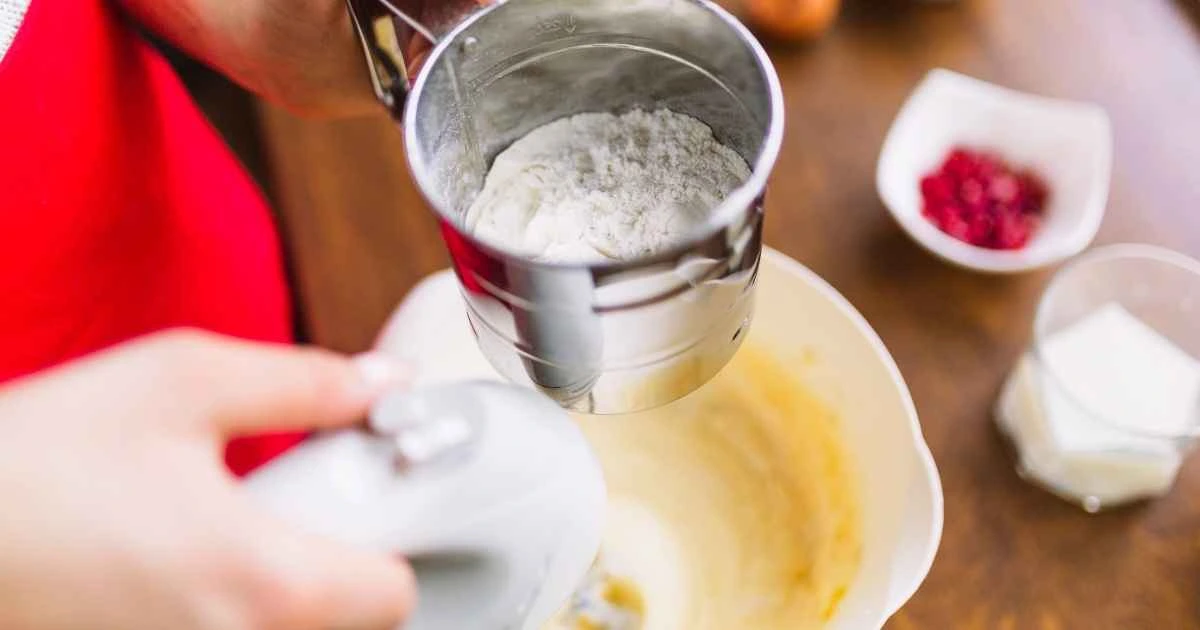
- Sift dry ingredients – Pass each ingredient through a fine-mesh sieve individually. This step ensures a lump-free powder and better distribution.
- Combine thoroughly – Add all three ingredients to your bowl. Whisk vigorously for one to two minutes until the mixture appears completely uniform.
- Store properly – Transfer to an airtight container immediately. Label with the preparation date. Keep in a cool, dry location away from moisture and heat sources.
- Test before using – Check freshness every month or two using the water test described below.
Perfect Ratios and Conversions: Your Quick Reference
Common Conversion Guide
Need to substitute in a recipe? Use these conversions:
| Recipe Calls For | Use This Homemade Mix |
|---|---|
| 1 teaspoon | 1 tsp baking soda + 2 tsp cream of tartar |
| 1 tablespoon | 1 tbsp baking soda + 2 tbsp cream of tartar |
| 2 teaspoons | ⅔ tsp baking soda + 1⅓ tsp cream of tartar |
Alternatives When You Don’t Have Cream of Tartar
Running low on cream of tartar? These substitutes work in a pinch:
| Alternative Acid | Amount Needed | Best Used For | Notes |
|---|---|---|---|
| Lemon Juice | 2 teaspoons per 1 tsp baking soda | Quick breads, pancakes | Reduce other liquids by 2 tsp |
| White Vinegar | 2 teaspoons per 1 tsp baking soda | Savory baking, muffins | May slightly affect flavor |
| Buttermilk | ½ cup per 1 tsp baking soda | Cakes, biscuits | Reduce milk by ½ cup |
Testing Your Homemade Baking Powder for Potency
The Hot Water Test
This 30-second test reveals whether your powder still packs punch:
- Add half a teaspoon of your mixture to a quarter cup of hot (not boiling) water
- Watch for immediate, vigorous bubbling and fizzing
- Strong reaction means your powder is fresh and effective
- Weak or no reaction indicates expired or improperly mixed ingredients
Signs Your Powder Has Lost Effectiveness
Watch for these warning signs:
- Clumping or hardening texture
- Absence of bubbles during the water test
- Flat baked goods despite following recipes correctly
- Previous exposure to moisture or improper storage
Common Mistakes and How to Avoid Them
Top Errors Home Bakers Make
- Wrong ingredient ratios – Too much baking soda creates an unpleasant metallic taste. Always maintain the 1:2 ratio.
- Using expired ingredients – Old baking soda loses effectiveness over time. Test freshness by adding a splash of vinegar—it should fizz vigorously.
- Improper storage – Moisture activates the powder prematurely, rendering it useless. Use airtight containers and consider adding a silica packet.
- Insufficient mixing – Uneven distribution causes inconsistent rise throughout your baked goods. Sift and whisk for at least one full minute.
- Making large batches too far ahead – Potency decreases over time. Create fresh monthly batches or mix immediately before use.
Practical Tips for Baking Success
Best Practices for Using Your Homemade Version
Mix dry ingredients first – Combine your flour, powder, and other dry ingredients before introducing wet components.
Don’t overmix batter – Once you’ve added liquid to your powder-containing mixture, mix just until combined. Overmixing deflates those precious bubbles.
Bake immediately – After mixing wet and dry ingredients, get your batter into the oven quickly for maximum rise.
Adjust for altitude – High-altitude bakers may need to reduce leavening agents slightly.
Store between uses – Keep your storage batch sealed tightly after each use.
Frequently Asked Questions
Can you make baking powder without cream of tartar?
Yes, though you’ll need alternative acids. Lemon juice or vinegar (2 teaspoons per 1 teaspoon baking soda) work when mixed directly into wet ingredients. Remember, these create single-action leaveners requiring immediate baking.
How long does homemade baking powder last?
Your creation with cornstarch lasts one to three months when stored in an airtight container. Without cornstarch, use immediately after mixing. Always conduct the hot water test before starting important baking projects.
Is homemade baking powder as effective as store-bought?
Absolutely. When prepared with the correct 1:2 ratio and used fresh, your homemade version performs equally well. The primary difference involves action timing—homemade versions typically react once (when wet), while commercial versions are double-acting (reacting when wet and again when heated).
What’s the difference between baking soda and baking powder?
Baking soda is pure sodium bicarbonate requiring acid activation. Baking powder combines baking soda, acid (cream of tartar), and usually a buffer (cornstarch) into one complete leavening system.
Your Path to Baking Independence
You now possess the complete knowledge for creating effective leavening powder whenever needed. Whether mixing a quick batch for emergency pancakes or preparing a storage jar lasting months, this simple 1:2 ratio opens doors to baking freedom.
Remember these essentials: combine one part baking soda with two parts cream of tartar for immediate use, or add equal parts cornstarch for extended storage. Always test potency with hot water before beginning important projects.
The real beauty of mastering this skill extends beyond convenience. You’re taking control of your ingredients, saving money, and ensuring maximum freshness in every batch. Those spontaneous baking moments—Sunday morning biscuits, unexpected birthday cakes, midnight cookie cravings—remain always within reach.
Ready to revolutionize your baking? Start today by checking your pantry for baking soda and cream of tartar. Mix your first batch, test it with hot water, and experience the satisfaction of self-sufficient baking. Your kitchen confidence will soar, your baked goods will rise perfectly, and you’ll never face that Sunday morning panic again.
Try this technique in simple recipes first—pancakes, muffins, or basic biscuits—then progress to more delicate creations. You’ll quickly discover that homemade isn’t just convenient; it’s genuinely superior. Take action now and transform your baking forever.