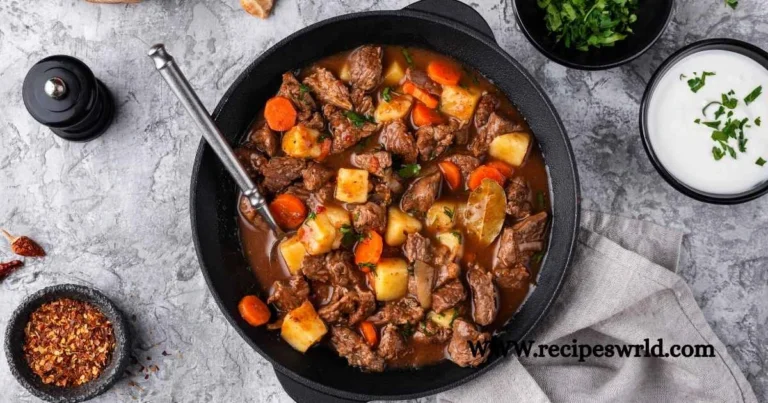
Beef Stew Recipe Stove Top: Learn how to cook a rich and flavorful beef stew easily on your stovetop.
Table of Contents
There’s something deeply grounding about standing at your stove while a pot gently simmers. The sound is soft, almost reassuring. The aroma fills your kitchen slowly, not rushed, not forced. When you make a beef stew recipe stove top, you’re not just preparing dinner — you’re creating a moment of comfort that feels familiar and deeply satisfying.
You don’t need special equipment, fancy techniques, or hours of hands-on work. What you need is patience, the right ingredients, and a method that respects flavor. This guide walks you through exactly how you can cook a rich, hearty beef stew on your stovetop — one that turns simple ingredients into something memorable.
By the time you finish reading, you’ll know how to build flavor step by step, avoid common mistakes, and confidently make a stovetop beef stew that tastes like it’s been passed down for generations.
Why a Beef Stew Recipe Stove Top Still Works Better Than You Expect
Stovetop cooking gives you direct control. You can see how the beef browns, smell when the onions are ready, and adjust heat the moment something needs attention. Unlike slow cookers or ovens, the stove keeps you connected to the process — and that connection shows up in the final taste.
When you cook beef stew on the stove top, you benefit from:
- Immediate heat control for better browning
- Faster flavor development
- One-pot convenience
- Easier seasoning adjustments
- A thicker, more concentrated broth
You’re not guessing what’s happening inside a closed appliance. You’re guiding it, step by step.
Understanding What Makes a Great Stove Top Beef Stew
A good beef stew is about balance. Texture matters as much as flavor. The beef should be tender without falling apart. The vegetables should be soft but not mushy. The broth should coat the spoon, not run off it like water.
To get there, your stew needs four core elements working together:
- The right cut of beef
- Layered seasoning
- Proper browning
- Gentle, consistent simmering
Skipping even one of these steps can leave you with a stew that feels flat or unfinished.
Choosing the Best Ingredients for Beef Stew Recipe Stove Top
The Best Beef Cut for Stove Top Stew
You want a cut that improves with time. Lean meat dries out quickly, but tougher cuts become tender when cooked low and slow.
Best options:
- Chuck roast (top choice)
- Shoulder steak
- Blade roast
These cuts contain connective tissue that slowly breaks down during simmering, giving you rich flavor and soft texture.
Avoid:
- Sirloin
- Round steak
- Pre-cut “stew meat” with no labeling
Vegetables That Hold Their Shape and Flavor
Vegetables are not fillers. They’re flavor contributors.
Best vegetables for stove top beef stew:
- Carrots (sweetness and color)
- Potatoes (body and comfort)
- Onions (depth and aroma)
- Celery (background savoriness)
Optional additions:
- Mushrooms
- Parsnips
- Turnips
- Peas (added at the end)
Flavor Builders You Should Never Skip
These ingredients don’t dominate, but without them, the stew feels incomplete:
- Garlic
- Tomato paste
- Bay leaf
- Dried thyme or rosemary
- Beef broth or stock
Each one adds a layer, not noise.
Beef Stew Recipe Stove Top – Ingredients Table
| Ingredient | Quantity | Why You Need It |
|---|---|---|
| Beef chuck | 2 lbs | Becomes tender and flavorful |
| Potatoes | 3 cups | Adds body and comfort |
| Carrots | 2 cups | Natural sweetness |
| Onion | 1 large | Flavor base |
| Celery | 2 stalks | Savory balance |
| Garlic | 3 cloves | Aromatic depth |
| Tomato paste | 2 tbsp | Umami richness |
| Beef broth | 4 cups | Forms the stew base |
| Bay leaf | 1 | Slow-release flavor |
| Olive oil | 2 tbsp | Browning the beef |
| Salt & pepper | To taste | Essential seasoning |
How You Cook Beef Stew Recipe Stove Top – Step-by-Step
Step 1: Prepare and Season the Beef
Cut the beef into evenly sized chunks, about 1½ inches. Pat them dry thoroughly. Moisture prevents proper browning.
Season generously with salt and pepper. This isn’t just surface flavor — it’s the foundation of your stew.
Step 2: Brown the Beef Properly
Heat a heavy-bottomed pot over medium-high heat. Add oil, then place the beef in a single layer.
Important rules:
- Don’t overcrowd the pot
- Don’t move the beef too early
- Brown in batches if needed
You’re creating flavor through caramelization. That dark coating on the pot? That’s gold.
Step 3: Build the Flavor Base
Lower the heat slightly. Add onions and celery to the same pot. Scrape up the browned bits as they soften.
Add garlic and tomato paste. Stir continuously for about one minute. This step deepens flavor and removes raw acidity from the tomato paste.
Step 4: Deglaze and Combine
Pour in a small amount of broth to loosen everything stuck to the bottom. Then add:
- Remaining broth
- Bay leaf
- Herbs
- Beef back into the pot
Bring to a gentle simmer — not a boil.
Step 5: Simmer Low and Slow
Cover the pot partially and let it simmer gently for 90 to 120 minutes. Stir occasionally.
The stew should barely bubble. Aggressive boiling toughens meat.
Step 6: Add Vegetables at the Right Time
Add carrots and potatoes during the last 45 minutes. This keeps them tender without falling apart.
Taste and adjust seasoning near the end.
How Long Should Beef Stew Simmer on the Stove Top?
Time matters, but texture tells the truth.
General guideline:
- Minimum: 1½ hours
- Ideal: 2 hours
You know it’s ready when:
- Beef breaks apart with gentle pressure
- Broth feels rich, not thin
- Vegetables hold their shape
If the stew tastes flat, it usually needs more time — not more salt.
How You Thicken Beef Stew Naturally
You don’t always need flour or cornstarch.
Natural thickening methods:
- Let it simmer uncovered for the final 20 minutes
- Mash a few potato chunks into the broth
- Allow the stew to rest before serving
Thickness improves as the stew cools slightly.
Common Mistakes That Ruin Stove Top Beef Stew
- Skipping the browning step
- Cooking at high heat
- Adding all vegetables at once
- Under-seasoning early
- Rushing the cooking process
Beef stew rewards patience. Every shortcut shows in the final bowl.
Flavor Variations for Beef Stew Recipe Stove Top
Classic Old-Fashioned Version
- Simple herbs
- No wine
- Focus on beef and vegetables
Rich Red Wine Beef Stew
- Replace 1 cup of broth with red wine
- Adds depth and complexity
Lightened-Up Beef Stew
- More vegetables
- Fewer potatoes
- Clearer broth
What You Should Serve With Stove Top Beef Stew
Beef stew pairs best with simple sides:
- Crusty bread
- Biscuits
- Mashed potatoes
- Steamed rice
- Green salad
These sides soak up the broth without competing for attention.
How You Store and Reheat Beef Stew Safely
Refrigeration
- Store in airtight containers
- Keeps well for 3–4 days
Freezing
- Freeze without potatoes if possible
- Lasts up to 3 months
Reheating
- Reheat gently on the stove
- Add a splash of broth if needed
Beef stew often tastes better the next day.
Beef Stew Recipe Stove Top – Frequently Asked Questions
Can you make beef stew on the stove top instead of a slow cooker?
Yes. Stove top cooking offers better control and deeper flavor development.
Why is my stove top beef stew tough?
The heat was likely too high or the stew didn’t cook long enough.
How long does beef stew take on the stove top?
Most recipes need 1½ to 2 hours for proper tenderness.
Can you thicken beef stew without flour?
Yes. Reduction, potatoes, and resting time work well.
Why This Beef Stew Recipe Stove Top Deserves a Place in Your Kitchen
This isn’t just another recipe. It’s a method you can trust. Once you understand how the process works, you can adapt it endlessly — different vegetables, herbs, or seasoning blends.
The stovetop gives you flexibility, control, and confidence. You’re not following strict rules. You’re learning how flavor builds and how patience pays off.
Your Next Step
If this guide helped you feel more confident about cooking beef stew on the stove top, don’t stop here.
- Save this recipe
- Share it with someone who loves comfort food
- Leave a comment with your own twist
- Explore more stovetop recipes that build real flavor
Great cooking doesn’t come from shortcuts. It comes from understanding — and now, you have it.